From Jupyter Notebook to Production Web App, with Anvil and (only) Python
Speaker: Meredydd Luff
Summary
The best model or analysis in the world is no use if it's stuck in a Jupyter notebook. In this talk, I will show you how to turn a model into a web app, without being a full-stack developer. All you need is Python!
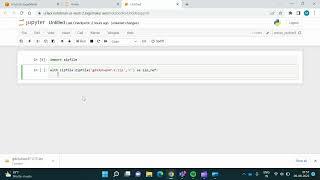
We'll start with a model in Jupyter, then we'll turn it into an interactive web app that colleagues or customers can use. Then we will deploy it to production.
Meredydd Luff's Bio
Meredydd thinks programming should be more accessible. From discovering that QBASIC was the best toy ever, to a PhD in building usable programming systems, he wants other programmers to be able to have the same fun he's having. These days, he's a founder at Anvil, which makes full-stack interactive web apps as simple as writing a Python program.
GitHub: https://github.com/meredydd/
Twitter: https://twitter.com/meredydd/
LinkedIn: https://www.linkedin.com/in/meredydd/
PyData Global 2021
Website: https://pydata.org/global2021/
LinkedIn: https://www.linkedin.com/company/pydata-global
Twitter: https://twitter.com/PyData
www.pydata.org
PyData is an educational program of NumFOCUS, a 501(c)3 non-profit organization in the United States. PyData provides a forum for the international community of users and developers of data analysis tools to share ideas and learn from each other. The global PyData network promotes discussion of best practices, new approaches, and emerging technologies for data management, processing, analytics, and visualization. PyData communities approach data science using many languages, including (but not limited to) Python, Julia, and R.
PyData conferences aim to be accessible and community-driven, with novice to advanced level presentations. PyData tutorials and talks bring attendees the latest project features along with cutting-edge use cases.
00:00 Welcome!
00:10 Help us add time stamps or captions to this video! See the description for details.
Want to help add timestamps to our YouTube videos to help with discoverability? Find out more here: https://github.com/numfocus/YouTubeVideoTimestamps